

Modern workplace safety management no longer focuses only on large mechanical equipment protection, but also pays close attention to small repetitive operational tools. Tape cutting and packaging are repetitive daily tasks in offices, warehouses, logistics centers and manufacturing workshops. Long-term improper operation with outdated tools easily causes wrist strain, finger scratches, muscle fatigue and other occupational injuries. In recent years, continuous ergonomic design upgrades have become a core trend in packaging tool manufacturing, effectively optimizing user operation posture and greatly improving overall workplace safety and operational comfort.
Traditional packaging tools usually adopt rigid and unified structural design, ignoring the differences in usage scenarios and human body mechanics. Many basic models feature sharp exposed blades, fixed uncomfortable angles and unstable bases, bringing potential safety hazards during long-hour continuous work. To solve these pain points, manufacturers start to optimize every detail from grip radian, blade protection and weight balance. These humanized upgrades effectively reduce repetitive strain injuries and accidental cuts, creating a safer working environment for frontline packaging staff.
Lightweight and anti-slip ergonomic optimization is widely applied in desktop office packaging tools. Traditional office cutting tools are either too heavy to hold steadily or overly light and prone to sliding during operation. The newly upgraded scotch tape dispenser adopts curved non-slip grip design and gravity balance structure, which fits the natural bending angle of human fingers. Workers can complete cutting operations with minimal force, avoiding wrist torsion caused by awkward gestures and effectively reducing office work fatigue and safety risks.
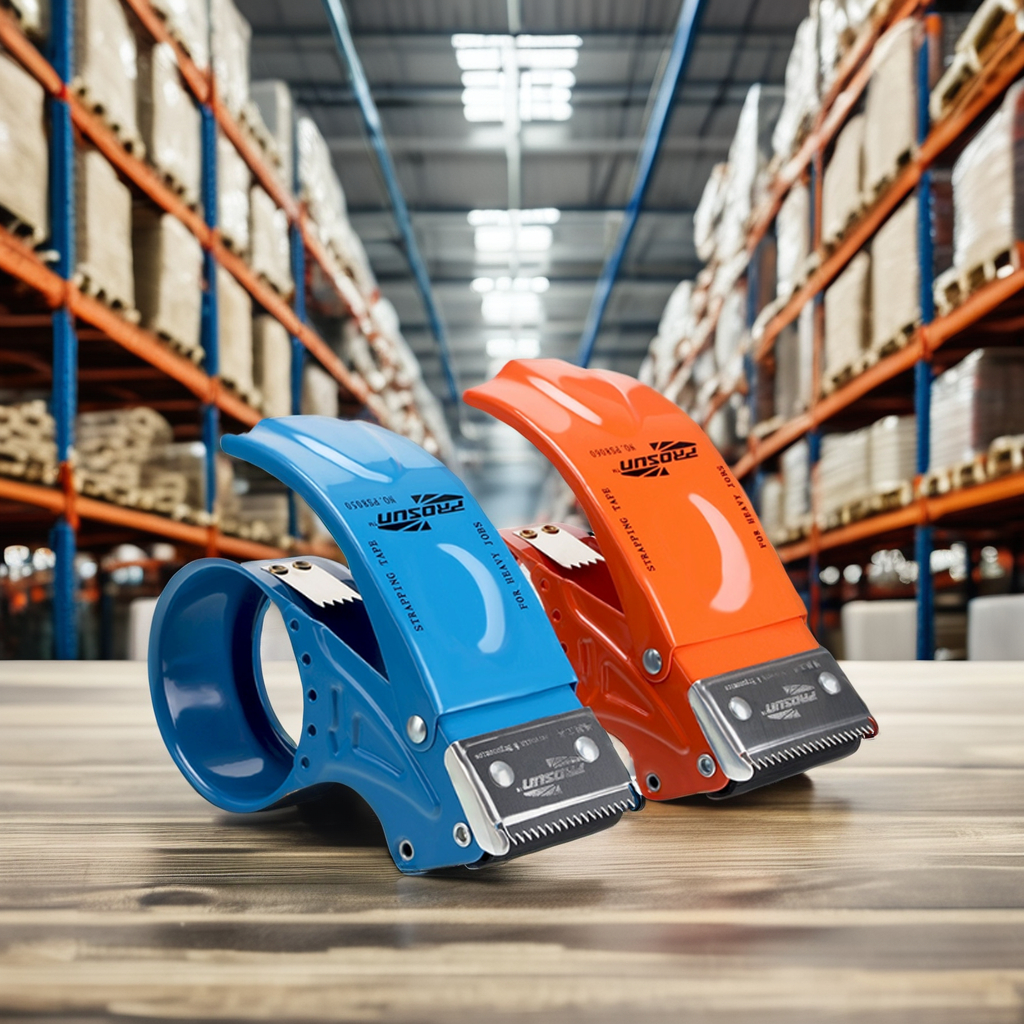
For high-intensity industrial packaging scenarios, ergonomic structural improvements focus more on operational stability and anti-injury performance. Warehouse and logistics staff need to complete thousands of packaging and sealing operations every day, putting forward higher requirements on tool durability and safety. Optimized structural design adds hidden safe blade covers and shock-absorbing base structures to professional packaging tools. The upgraded heavy duty tape dispenser avoids blade exposure risks during frequent use, while its balanced weight distribution prevents tipping and slipping, greatly lowering industrial operational accident rates.
Another major ergonomic trend is multi-scene adaptive design, which breaks the limitation of single-function tools and further standardizes safe operation. Different packaging materials and working environments require matched tool structures to ensure operational safety. Traditional single-structure tools are difficult to adapt to high-frequency sealing work, easily causing tape deviation, repeated pulling and accidental scratching. The newly optimized packing tape dispenser integrates adjustable tape guide angle and buffer cutting structure, adapting to various packaging specifications. It ensures smooth one-handed operation, reduces repeated movements, and further eliminates potential safety hazards in batch packaging work.
With the continuous improvement of global workplace safety standards, ergonomic design has become a necessary benchmark for qualified packaging tools, rather than an optional advantage. More enterprises regard humanized tool configuration as an important part of employee occupational health protection. In the future, with the integration of intelligent induction and more precise human body data design, packaging tools will achieve higher safety and efficiency, helping all walks of life build more standardized, comfortable and safe working environments.